P. 02
Decide the scope before you decide the price
On a remodel, everything you leave in place becomes yours. A table of what you are actually agreeing to every time a homeowner keeps old plumbing, an old heater, or existing coping.
Free field guide · 12 pages
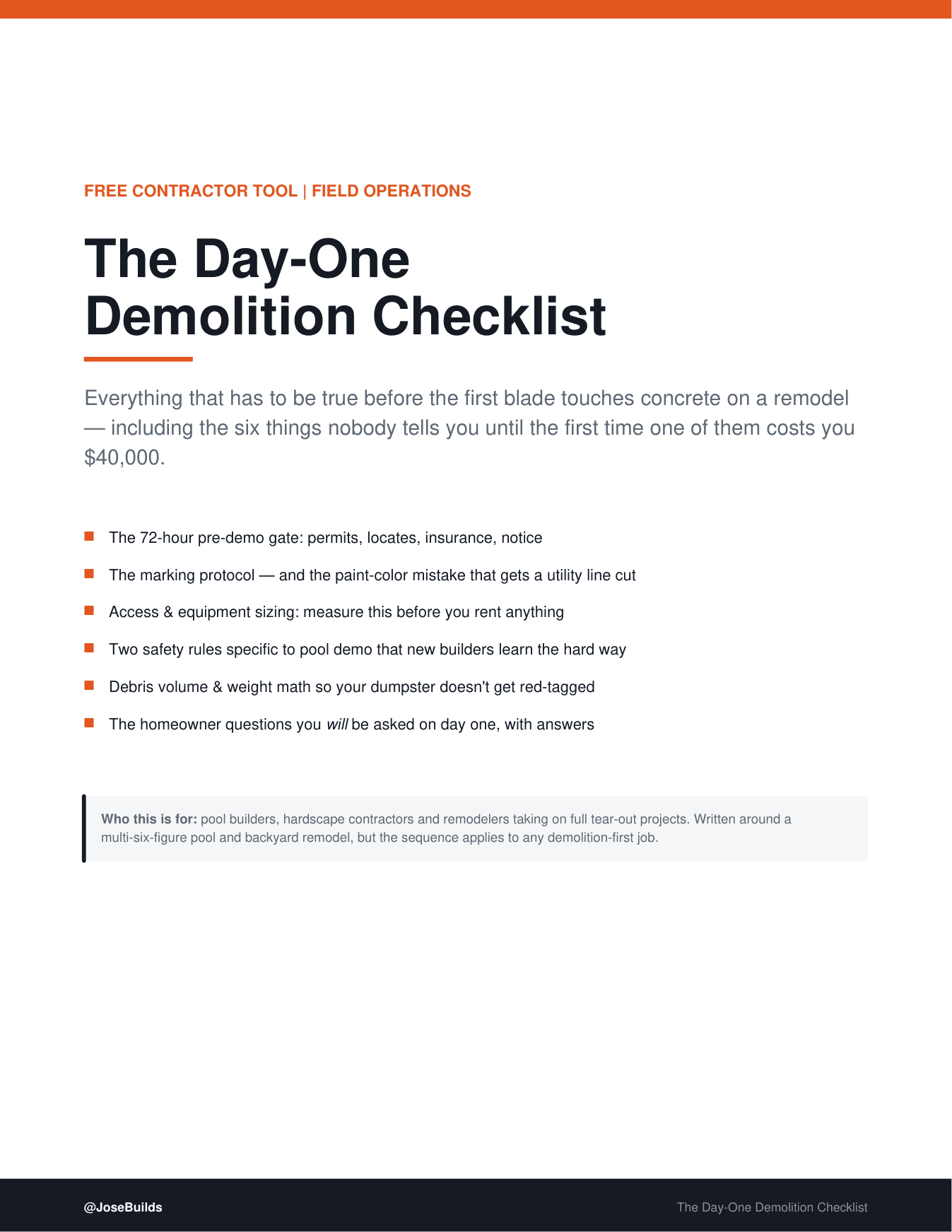
Everything that has to be true before the first blade touches concrete on a remodel, including the six things nobody tells you until the first time one of them costs you.
12 pp. · PDF
Contents
P. 02
On a remodel, everything you leave in place becomes yours. A table of what you are actually agreeing to every time a homeowner keeps old plumbing, an old heater, or existing coping.
P. 03
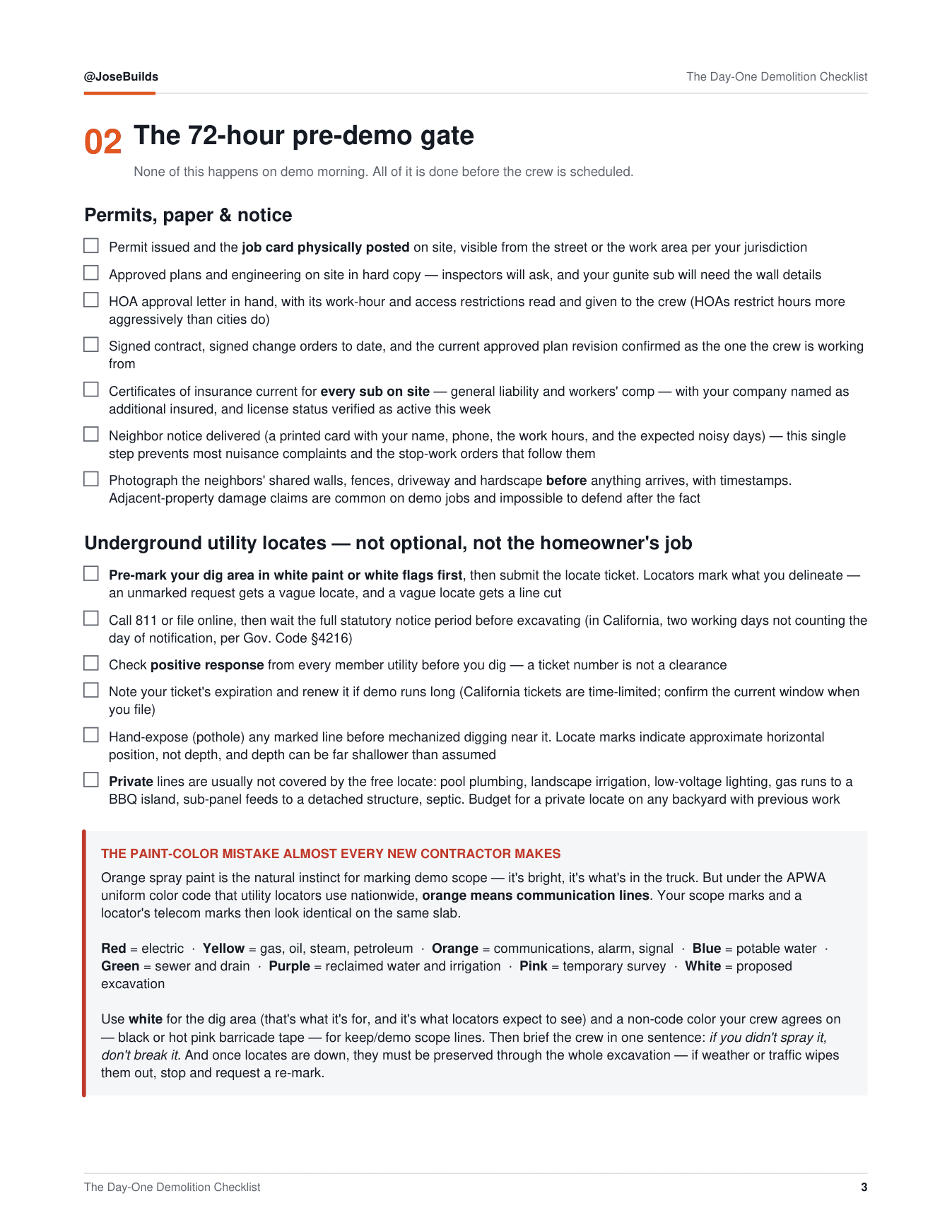
Permit posted, plans on site, HOA letter in hand, current COIs for every sub, neighbor notice delivered, shared walls photographed with timestamps, and the utility locate called in. None of it happens on demo morning.
P. 04
Twenty minutes in the backyard with the homeowner, converting every assumption into a mark on the ground and a photo on your phone. Includes the keep list and what “stack it neatly on the side yard” actually costs you.
P. 05
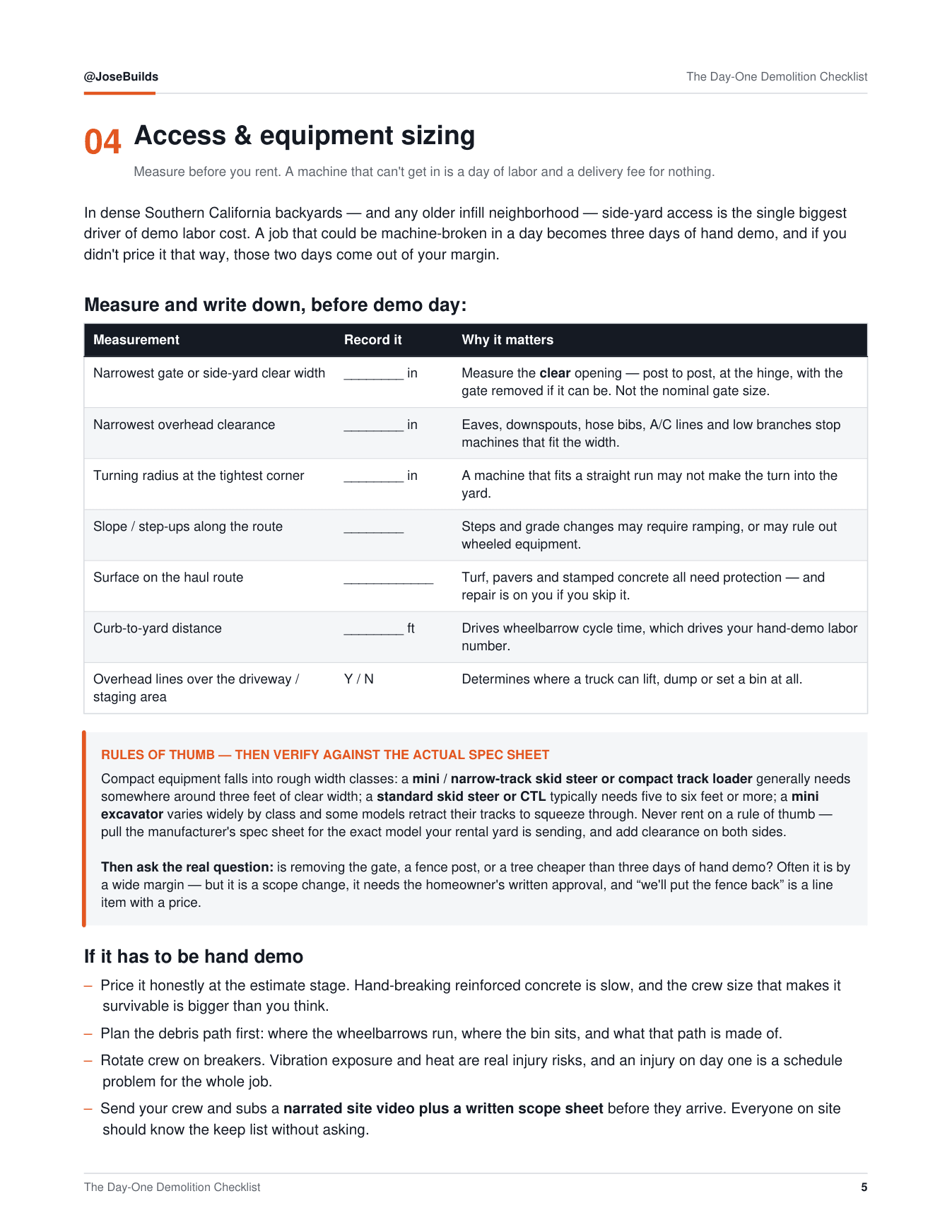
The seven measurements to write down before you rent anything: clear gate width post to post, overhead clearance, turning radius, step-ups, haul-route surface, curb-to-yard distance. A machine that cannot get in is a day of labor and a delivery fee for nothing.
P. 06
Why the water stays in the pool until the last responsible moment. Most contractors know the fall-protection reason. The one that costs $60,000 is hydrostatic uplift, and it turns a shell you were only supposed to keep into a shell you have to replace.
P. 08
Cubic yards = (length ft × width ft × thickness in) ÷ 324, then a bulking factor for broken rubble, then the conversion nobody runs. With concrete you hit the truck’s weight limit first, often with the bin a third full.
P. 10
How long until it is done, can you just also demo that section, what if I want a different finish. The answers that protect you, worded so your PM can give the same ones you would.
P. 11
The cheapest bad project is the one you never started. Plus a printable day-one sign-off page to have signed on site, photographed, and attached to the job file.
Preview
Spreads from the 12-page file you get.

Who wrote this
@joserojasbuilds
Jose still builds. These guides are written out of jobs that were actually run, which is why the details are unglamorous: gate widths, dumpster tonnage caps, and the sentence you say when a homeowner asks for a number while you are standing in the dirt.
This is for you if
This is not for you if
Before you give us your email
Probably the two on page 6 and the arithmetic on page 8. Hydrostatic uplift is the one that gets learned expensively, and most estimates size the dumpster by volume when concrete always hits the weight cap first. If you already run both, take the printable sign-off sheet on page 11 and ignore the rest.
It was written around a pool and backyard remodel, and two of the safety rules are pool-specific. The pre-demo gate, the walkthrough, the access measurements and the debris math apply to any demolition-first job. If you tear out concrete for a living, most of it is yours.
No. It is a PDF, and the download link is on the next screen. You get emails from Contractor Club afterwards and you can leave that list from any of them. Phone number is optional and nothing on this page requires it.
12 pages · Free · PDF
No call, no calendar link. Enter an email and the guide is on the next screen.